How Quran was complied

Welcome to Sheikhy Notes, unique website that features, videos, notes given by traditional Muslim scholars. As well my posts/articles on particular subjects. Scroll down for various topics, scholars, links, quotes and monthly archives or use search engine to find posts. Please note that articles are copyright and cannot be copied without express permission. Allah Subhanu wa Ta’ala knows best. Est. 2005, ma sha Allah.
Showing posts with label Understanding Islam. Show all posts
Showing posts with label Understanding Islam. Show all posts
Tuesday, December 10, 2013


Friday, June 07, 2013
Syed/Ahl Al-Bayt/Sharif survival guide

We live in times of great turmoil in which the unlawful is readily accessible and the lawful is hard to find. We see changes taking place that are nothing but astounding. We see murder taking place everywhere.
In this mess of human nature we still find the descendant or scion of the Prophet (may Allah bestow peace and blessings be upon him) among us. This is a great blessing but do we take the full benefit of this? I do not think we do. Or we claim to and love to think we do but the facts are cold and shocking.
I have yet to find a member of the blessed household that does not suffer from harm from people. If it was warranted then no one would be complaining but most of the time it is not warranted at all. Most of the time it is due to the reactions of extreme partisanship, whether religious or otherwise.
So this work is aimed at those members of the Ahl Al-Bayt who are struggling to find themselves in the world and are suffering abuse. So most of what is written here will only make sense to a Syed/Sharif as it is addressing them specifically.
Is it a Shia thing?
Most certainly not! This is a Sunni thing! The term Ahl Al-Bayt is used in the Quran and by the Prophet (may Allah bestow peace and blessings upon him). Throughout history they have been revered, respected and oppressed. But in the last hundred years reverence has slowly eroded and is now mere lip service.
إِنّمَا يُرِيدُ اللهُ لِيُذْهِبَ عَنْكُمُ الرّجْسَ أَهْلَ الْبَيْتِ وَيُطَهّرَكُمْ تَطْهِيرًا
“Allah only desires to remove filth away from you, family of the house, and purify you completely.”(Quran: the Clans 33:33).
When this verse was revealed the Prophet (may Allah bestow peace and blessings upon him) gathered his family namely Fatimah, Ali, Hassan and Hussain (may Allah be pleased with them all) and made a supplication that these were his family. So this includes the offspring that come from them.
The Shia began as a political party in favour of the leadership of Ali Ibn Abu Talib (may Allah be pleased with him) and it was only after the martyrdom of Al-Hussain (may Allah show him mercy) did they break off from the Sunni tradition. Then form their own beliefs and so forth but this did not occur in a vacuum it occurred because of the oppression that the leaders of the time metered out to them.
Current circumstances
So when we hear people speak about the issue of Ahl Al-Bayt or Ahle Bait we see them use this subject to excite audiences but there is very little in the way of follow up on this subject. So that is why we are saying that love of the Ahl Al-Bayt is lip service and nothing more.
There are only few Muslims who give each other their rights, so you can forget about the Ahl Al-Bayt! When someone is arguing with a member of the family they will seek to crush him in any manner they can. Even though they are in the wrong it will not concern them at all, they want to win the argument and will do anything to achieve it.
I have also seen people who debate with Ahl Al-Bayt and when they say something that they do not like then they accuse them of not coming from the family! Is this how we treat Ahl Al-Bayt? When they agree with us then they are Ahl Al-Bayt and if they disagree then they are innovators, mushriqs or even kafirs! How we have lost our way just to win an argument.
There are many people who weep in gatherings for muharram and come out to harm the sons of Al-Hussain. Yes, this is very common, even from some teachers.
There are many people who weep in gatherings for muharram and come out to harm the sons of Al-Hussain. Yes, this is very common, even from some teachers.
The titles
Depending on the part of the Islamic world you come from the Ahl Al-Bayt may be called Syed or Sharif or Hussani or Hassani. The first two terms are famous, Syed for the Indo-pak world and Sharif for the Arab world. Also famous is the name Shah which at times is synonymous with Ahl Al-Bayt; predominately in the Indo –Pak and Indonesian regions. In the Indo-pak regions there are many people who have surnames of Hussain or Sharif and do not belong to the family. Its just there surname, so I would advise people to trace their lineage and find out where this name originates.
Many leaders historically were Shahs, Sharifs or Syeds in these regions. Although in other regions it may not be so obvious from the surname that someone is from the family. It is also worth noting some Hindu’s also have the surname shah. I have used the term the family in this work using the translation of the word Ahl.
In many cases people are unaware of the status of being Ahl Al-Bayt. This is due to many reasons some of which are the proliferation of people into areas in which they do not have much family. And of course a divorce from cultural norms which is something that any immigrant communities have become known for. Many people try to assimilate into the regions that they have moved into.
The term Sherif meaning someone who was the upholder of the law in an area especially in America. Could have come from Islam as we know that Islam was present in America before the founding fathers came there and there was a systematic removal of all Muslims by a branch of the Spanish Inquisition. And like Spain, many things could not be removed totally and this could have been one of them. So the local leader was a Sharif until this title was taken then used in another way.
Can someone become Ahl Al-Bayt?
It is not a rank that one can aspire to as it is something that they are born with. As it is lineage from the father to the children and this is called nasab which means the father is from Ahl Al-Bayt.
If the mother is Ahl Al-Bayt and the father is not then this is called sibt. The difference being that the nasab continues the lineage and sibt finishes with those children of the female of the Ahl Al-Bayt. Please note, some scholars reject sibt totally, in order not to confuse people.
So a person whose father is Ahl Al-Bayt his lineage continues but the one whose mother is only from Ahl Al-Bayt then it stops with her immediate children.
This is a birth right and cannot be attained; it can only be bestowed by Allah (the Exalted).
Dr Khalid Blankenship's has the opinion that everyone has some blood of the Prophet (may Allah bestow peace and blessings upon him) in them, including many non-Muslims. There are two ways that someone is from the family of the Prophet (may Allah bestow peace and blessings upon him). Both are in terms of lineage. Nasab is when the father of the child is from the family and sibt is when the mother alone is from the family. When someone's father is Ahl Al-Bayt then that child and his offspring are from the family. When someone's mother is from family and not the father, then the immediate offspring are from the family but after that, the lineage is broken. Not to confuse the public some scholars said that sibt is not Ahl Al-Bayt because their lineage is cut from them.
This is based from the following hadith:
The Messenger of Allah (may Allah bestow peace and blessings upon him) said,
كل سبب و نسب ينقطع يوم القيامة إلا سببي ونسبي
“Every ancestry and lineage is severed on the day of judgement except my ancestry and my lineage.” (Al-Tabarani in Al-Kabir 3/45 and Al-Daylami in Al-Firdaws 3/255.)
This is why it is important for both to maintain the blood of the family. So even though there might be trace their lineage to a female of the Ahl Al-Bayt. The lineage was cut with her immediate children. This is the dominate position and Dr Khalid's position cannot be accepted because it is an isolated opinion and against the majority. With due respect given to those who differ but the blood of the Prophet (may Allah bestow peace and blessings upon him) would not be present in a disbeliever. DNA may remain but that would arab DNA and no link.
Exception?
There is a hadith in which the master of the Messengers (may Allah bestow peace and blessings upon him) said,
سلمان منا أهل البيت
"Salman is from us, the family of the house."
Al-Hakim and Al-Tabarani.
This is an exception and not the rule. The background of this hadith is that Salman the Persian (may Allah be pleased with him) had suggested that a trench be dug to protect Medinah against the upcoming armies of the disbelievers. The Ansar and the immigrants made statements that Salman was from them. As he had been in search of the last prophet and was taken into slavery to Medinah. So he was not from either Arabian group. Then the Prophet (may Allah bestow peace and blessings upon him) said, "Salman is from us." Even though, he had no lineage to the Ahl Al-Bayt. A freed slave belongs to those who set him free. Salman (may Allah be pleased with him) was assisted and thus able to purchase his freedom. This is an exception and not the rule.
There is another hadith which is very weak or even fabricated that every upright believer is from the family but it is not accepted.
Marriage issues
Marrying a woman from the Ahl Al-Bayt for a non Ahl Al-Bayt male is not something that should occur because it is cutting the lineage. The non-Ahl al bayt male/female has to consider if they harm their partner then he hurts the Prophet (may Allah bestow peace and blessings upon him). This is why a person should try to avoid this as there are other ways to respect Ahl Al-Bayt.
So the responsibility of marrying into the family is as great for a male as it is for a female. As when they marry each other the lineage remains intact and pure. This should be the main consideration when anyone of the Ahl Al-Bayt marries, that it should be to maintain the lineage and increase the blessed offspring.
Regions like Yemen will not allow any Ahl Al-Bayt to marry outside the family and this has to be understood as protecting the purity of the lineage. It is not racist and no one should be offended.
What are their responsibilities?
Unlike the average Muslim who is representing Islam; Ahl Al-Bayt represent their grandfather (may Allah bestow peace and blessings upon him) as well. This is not as easy as it sounds and many people do fall short because of a lack of knowledge and circumstances.
Some do not practice Islam as people expect and this is our fault. So you might find someone of the Ahl Al-Bayt committing major wrong actions but know one thing that sooner or later they will repent. So if you admonish them for a sin do it as if you are admonishing your father, i.e. in the most gentle of manner. But also know sometimes people do not listen to admonishment. Even the admonishment of Ahl Al-Bayt to Ahl Al-Bayt has to be gentle or they will both loss blessings.
Imam Ghazali (may Allah show him mercy) said in Nasihat Al-Muluk/Cousel for Kings, "A descendant of Ali (may Allah ennoble his face) lived in Samarqand. One day when he was standing at the door of his house a woman passed by. The lane being empty, he seized the woman's arm and dragged her inside the house. Then he attempted to have intercourse with her. She said, "O Sayyid, first answer me one question. Then do what you please." He replied, "Speak." "If you possess me unlawfully and then I become pregnant by you and then a child comes, what do you think this child will be? A descendant of Ali or fatherless?" "A descendant of Ali," he said."Whether or not you yourself are one of Ali's descendants," she said, "the deed which you intended is something which genuine descendants of Ali would not do." (These words) abashed the descendant of Ali (may Allah ennoble his face). He let go of the woman's arm, and he vowed to Allah The Exalted that he would never treat women, whether near relatives or strangers in that way again."
Look at the wonderful example of this noble woman who reminded the Sayyid about his lineage and did it in a gentle manner. Even though he was very wrong, she did not match it with another wrong action. She instead turned the situation on its head by her gentleness. We do not see this in people today.
The religious or the practicing member of the family should be the best person in his region. Although, we are people and we fail to reach lofty heights that people expect of us. So we ask people to forgive our slackness.
We need to be involved in spreading Islam and sacred knowledge. In a manner that is synonymous with the way it was spread initially and free it from all types of culturalism.
The Ahl Al-Bayt will not be like the average people, they will be different. They will not react to events like others react. They may even be seen as strange or even weird by many people. This is one of the signs that they are from the family.
The Ahl Al-Bayt are more beneficial to others than themselves. Many a time they will help others but no one will help them.
Those of the Ahl Al-Bayt have to know that people will curse, attack, defame them in a myriad of different ways. Sometimes, it will be openly and sometimes secretly because if you are not like us then you are against us. Even giving some the benefit of the doubt means you are opening yourself to attack. So be prepared to forgive those who curse you and attack you. Most of them will come up to you use a respectful title (shah saab) and hurt you in the same conversation or even in the same sentence. Most of the people who claim to respect Ahl Al-Bayt do not. It’s just a term that they like to use to 'big' themselves up. So do not believe a word of the flattery they lavish you with because if you disagree with them over any point they will attack you in the most vicious manner and this is not jest. I have seen this time and time again.
After being insulted by someone who knows you are Ahl Al-Bayt it becomes very difficult to forgive them or over look what they have done but you have to try. As many of them will not be able to fully realise the sins that they are committing until they perish. A good rule of thumb is to expect to be disrespected and you will never be disappointed.
A person of the family should not think he is better than others, even though he is in lineage, but if found wanting in action then he is like others. Yet, if he starts to practice he will make great strides that others are unable to achieve except without extreme struggle.
He should not take advantage of his lineage so he can get things that others cannot. Nor use excuses by treating people in an unjust manner. They have to act responsibly and this is not always easy because often people catch you on a bad day.
I have heard of cases in which a Syed male is cheating people by feigning the rank of a spiritual master and using it to earn wealth. This is of course wrong and this person should be admonished gently then left alone. He is cheating people by Islam which is one the worst sins that anyone could do. Unless he repents his sins will catch up with his eventually.
Know a Syeds sins catch up with him so be vigilant about them. Repent at every given opportunity and try to avoid harming anyone. Also know that a Syed may find obstacles when he tries to commit sin and the person should realise this and refrain.
A Syed should also not have a lot of wealth, if he does then he might lose at some point in his life. You, like others, will have some kind of tribulation that you will face almost continuously, so do not expect an easy life. Give charity if you are able and do not ever cheat people by selling out Islam.
There are many of the family who do not even know they are from the Family! So ask your parents and seek out as much information as possible.
What are our responsibilities? How should we treat them?
We have to love them and that is explained in the Quranic injunction:
قُل لا أَسألكم عَلَيه أَجراً إلا المَوَدّةَ في القُربَى
“Say, ‘I do not ask of you a recompense for this, except love for my kinsfolk.” (Quran: Counsel 42:23.)
Ponder that this command is coming from Allah (the Exalted) to the Prophet (may Allah bestow peace and blessings upon him) to pronounce that his family should be respected, which a fruit of love. Only someone who loves the Prophet (may Allah bestow peace and blessings upon him) will respect the member of his family. It does not mention that we love them if they are righteous or hate them if they are unrighteous. We love them righteous or unrighteous. That is the position of Sunni Islam without any regional misinterpretation or modernisation.
If we can practice the command of Allah (the Exalted) in this issue then it fulfils many of our needs. Ponder how you would feel if someone respected your grandson? What would you feel towards that person? You would be happy with that person and a good person would feel indebted. So when you please Ahl Al-Bayt you please the Prophet (may Allah bestow peace and blessings upon him). But know that you cannot go against the sacred law in this matter.
The opposite is also true because if you upset Ahl Al-Bayt then you upset the Prophet (may Allah bestow peace and blessings upon him). Sheikh Al-Arabi Al-Darqawi was in a gathering where one of the family were insulting him but he did not say anything to him. When the Sharif realised his mistake, he apologised to him. Look at the Sheikh’s respect for Ahl Al-Bayt and how he did not react to the slander that he himself was witnessing. This would not happen now because they would attack back in such vigour that they would claim that he was not from the family. I have seen this occur, for less than this, with my own eyes.
If you find that they have taken a right from you or been unjust to you advise then and if nothing occurs then forgive them and leave the matter to Allah (the Exalted). Do not seek it especially if you fear that you may commit injustice. Having something bad in your heart against Ahl Al-Bayt is also very bad, so remove it as soon as you can. Many people attack Ahl Al-Bayt because they have a point to prove and do not realise who they are talking to until it is too late and the offense has occurred.
If you come across someone from the Ahl Al-Bayt without an ancestral tree/Shajara. Then as long he is known to be from the Ahl Al-Bayt in the area then that is sufficient. So you should still respect them if they do have one and you should never say to them ‘you are not from Ahl Al-Bayt you don’t have a tree’ which can be heard from those ‘lovers.’ I am not joking I have heard this with my own ears and this because the other person did not agree with the Ahl Al-Bayt so he said the above. It’s strange how people want to kiss your hand but insult you to your face!
Even if you meet someone who is from Ahl Al-Bayt and they are committing sins do not let that doubt their lineage because if you observe their behavior you will eventually find them doing a right action that is extra-ordinary. I knew a Sharif child who frequently misbehaved and he was extremely difficult child to discipline. He was once playing football and another child was hurt, he stopped playing the game and went over the child to see how he was. The game had not stopped and he was on the side that was losing! This was not normal behavior and you can see this type of behavior in the family. They will show compassion to others when you thought it not possible.
Many people use Ahl Al-Bayt for certain purposes or when it suits their needs and when it does not they discard them like a used rag. They take the benefit of their fame and throw insults at their faces. Someone once said to me, 'How can someone who insults Ahl Al-Bayt consider themselves Muslim?' This alone is sufficient proof that many people are not true Muslims because of this one fact alone.
Closing remarks
If you are Ahl Al-Bayt then try to find your lineage tree. This may be hard to find but try your best. Teach your relatives about the importance and responsibilities you have. Try to live up to the high expectations that people have of you and try to stay away from sin as best you can. Really think about your final journey and try to prepare the best works.
Practice Islam as best as you can and try to be righteous. People need to see the family of the Prophet (may Allah bestow peace and blessings upon him) striving for the afterlife and not striving after money. They also need to see good role models, unlike us.
Also know that one of the reasons that Allah (the Exalted) turns people against you is so you lose hope in them and turn to Him.
Know that the world is satans playground and you are the child he hates the most, so he is going to send unrighteous people after you, be warned. Satan hates the Prophet (may Allah bestow peace and blessings upon him) because he is a lantern of guidance and tries to get to him by trying to make the family split up. Ahl Al-Bayt have the worst family problems and this is sadly very common.
People who know Ahl Al-Bayt should try to be good to them and should be extremely vigilant over their actions towards them. If you have wronged them then they should address the wrong straight away lest you are punished or even worse that the punishment is passed onto your children. At the same time you should not allow them to cheat people over Islam, ever. This is something that you cannot stay quiet over and you should say something gently.
You should know that the majority of 'sunni' leadership is corrupt and still oppress Ahl Al-Bayt. Even if they claim to support them with fundraisers! Thus they are not really Sunni they are nothing but Yazid in another guise. This is more common than you think. The righteous Ahl Al-Bayt in this time are like Ghurabah/the strangers. They are not helped by anyone. They will prefer a subordinate teaching in their places rather than an intelligent member of the Ahl Al-Bayt. Yet, still claim to support the Ahl Al-Bayt! I have seen this 'unislamic' nature of Islamic businesses! Shia have no right to Ahl Al-Bayt whatsoever and that is final!
I pray that Allah (the Exalted) forgives our endless shortcomings and allows us to live up to high expectations. May endless blessings, salutations, benedictions, graces be upon our master Muhammad (may Allah bestow peace and blessings upon him).
The book Endless nobility of the Ahl Al-Bayt by Sheikh Yusuf Al-Nabahani is no longer available but a new version of this book is please click here. Or email me on so you can get your copy.
Please click here for forty hadith on the Ahl Al-Bayt by Sheikh Yusuf (may Allah show him mercy).
Please click here for forty hadith on the Ahl Al-Bayt by Sheikh Yusuf (may Allah show him mercy).
Thursday, May 03, 2012
The Purple Book of Generalities
Here's a link to a something we wrote in 2004-5. We were just making observations about our environment etc. We hope you enjoy it and there might be more on the way...
http://www.scribd.com/doc/91681319/Purple-Book-of-Generalities-PDF
http://www.scribd.com/doc/91681319/Purple-Book-of-Generalities-PDF
Saturday, September 11, 2010
Sheikh Hamza Yusuf
Shaykh Murabtal Haaj’s Fatwa on Following One of the Four Accepted Madhhabs
Translated by Hamza Yusuf Hanson
[Note: Hyperlinks within this document are links to footnotes at the bottom of the page]
In the name of Allah, the Merciful, the Compassionate.
Amongst the most important replies that I have given, is my reply concerning the one who has deviated to the point where he censures the importance of studying the branches [furu'] of jurisprudence, and we seek refuge in Allah from the deviation of such a wandering deviant. Would that he simply had claimed independent reasoning (ijtihad) for himself only, and Allah is his reckoner, but abandoned the call of Muslims to leave that which is incumbent upon them. In our reply to such a one, we make mention what the scholars of the methodological bases of Islamic jurisprudence (usuli’un) and the Imams of jurisprudence themselves have said about such a matter. As for my labelling him a deviant, it is only because he has desired to impose upon common people the precious rank of absolute independent reasoning [ijtihad], about which Muhammad an-Nabigha said,
And ijtihad in the land of the Moroccans,
The western phoenix has taken to flight with it.
I say in reply, that the following of qualified scholarship (taqlid) is an obligation on anyone other than an absolute mujtahid. I shall make mention of all his prerequisites if Allah wills. [Sidi Abdullah Ould Hajj Ibrahim] has said in his Maraqi as-Sa’ud:
“[taqlid] is necessary for other than the one who has achieved the rank of absolute ijtihad. Even if he is a limited [mujtahid] who is unable [to perform absolute ijtihad].”
Commenting on this line, [Sidi Abdullah] said in Nashru al-bunud,
“It means that taqlid is an obligation on anyone who is not an absolute mujtahid, even if he has achieved the limited rank of ijtihad muqayyad . . . [until he says], ‘And ask the people of the reminder, if you yourselves do not know.’”
By using the line of Muhammad an-Nabigha above, I am in no way claiming that all ijtihad has been severed in every land; how [could I say such a thing] when [Sidi Abdullah] says in Maraqi as-sa’ud:
“The earth will never be void of a mujtahid scholar until its very foundations shake.”
He also said,
“[Regarding] the necessity of binding to a specific madhhab, the [scholars] have mentioned its obligation upon anyone falling short [of the conditions of ijtihad].”
He says in Nashru al-bunud,
“It means that it is incumbent for whoever falls short of achieving the rank of absolute ijtihad to follow a particular madhhab.”
Again, in Maraqi as-Sa’ud, Sidi Abdullah says,
“The consensus today is on the four, and all have prohibited following [any] others.”
He says in Nashru al-bunud,
“This means that the consensus of the scholars today is on the four schools of thought, and I mean by the schools of Malik, Abu Hanifa, Shafi’i and Ahmad. Indeed, all of the scholars have prohibited following any other school of an independent and absolute mujtahid since the eighth century when the school of Dawud adh-Dhahiri died out and until the 12th Century and all subsequent ones.”
In the chapter concerning inferential reasoning, from Maraqi as-sa’ud, [Sidi Abdullah] says,
“As for the one who is not a mujtahid, then basing his actions on primary textual evidence [Qur’an and hadith] is not permissible.”
He says in Nashru al-bunud,
“It means that it is prohibited for other than a mujtahid to base his actions upon a direct text from either the Book or the Sunna even if its transmission was sound because of the sheer likelihood of there being other considerations such as abrogation, limitations, specificity to certain situations, and other such matters that none but the mujtahid fully comprehends with precision. Thus, nothing can save him from Allah the Exalted excepted following a mujtahid.
Imam al-Qarafi says,
‘And beware of doing what some students do when they reason directly from the hadith, and yet they don’t know their soundness, let alone what has been mentioned [by the Imams] concerning the subtleties involved in them; by doing this, they went astray and led others astray. And whoever interprets a verse or hadith in a manner that deviates from its intended meaning without proof [dalil] is a kafir.’”
As for the conditions of the absolute and independent ijtihad, they are mentioned in the Maraqi as-sa’ud in the following line and what follows:
“And that [word ‘faqih’2] is synonymous with the [word] ‘mujtahid’ coupled with those things which bear upon [him] the burden of responsibility,
Such as his being of extreme intelligence by nature, and there is some debate about one who is known to reject juristic analogy [qiyas]
He knows the [juristic] responsibilities through intellectual proofs unless a clear transmitted proof indicates otherwise.
[Sidi Abdullah] says [in his commentary] Nashru al-bunud,
“This means that among the conditions of ijtihad is that [the mujtahid] knows that he must adhere to the intellectual proof which is the foundational condition [al-bara’atu al-asliyya3] until a transmitted proof from a sacred law indicates otherwise.”
He then goes on to mention the other conditions of a mujtahid:
[The sciences of] grammar, prosody, philology, combined with those of usul and rhetoric he must master.
According to the people of precision, [he must know] where the judgements can be found without the condition of having memorized the actual texts.
[All of the above must be known] according to a middle ranked mastery at least. He must also know those matters upon which there is consensus.
[Moreover, he must know] things such as the condition of single hadiths and what carries the authority of great numbers of transmissions; also [knowledge of] what is sound and what is weak is necessary.
Furthermore, what has been abrogated and what abrogates, as well as the conditions under which a verse was revealed or a hadith was transmitted is a condition that must be met.
The states of the narrators and the companions [must also be known]. Therefore, you may follow anyone who fulfils these conditions mentioned above according to the soundest opinion.
So, consider all of the above-mentioned, and may Allah have mercy upon you, and [may you] see for yourself whether your companion is characterized by such qualities and fulfils these conditions—and I highly doubt it. More likely, he is just pointing people to himself in his demands that the people of this age take their judgements directly from the Book and Sunna. If, on the other hand, he does not possess the necessary conditions, then further discussion is useless.
In Muhammad ‘Illish’s, Fath al-‘Ali al-Malik, there are many strong rebukes for those who wish to force people to abandon the study of the judicial branches and take directly from the Book and the Sunna. The actual text of the question put to him is as follows:
“What do you say about someone who was following one of the four Imams, may Allah the Exalted be pleased with them, and then left claiming that he could derive his judgements directly form the Qur’an and the soundly transmitted hadiths, thus leaving the books of jurisprudence and inclining towards the view of Ahmad bin Idris? Moreover, he says to the one who clings to the speech of the Imams and their followers, “I say to you ‘Allah and His Messenger say’, and you reply ‘Malik said’ and ‘Ibn al-Qasim said’ or ‘Khalil said.’”
To this, Imam ‘Illish replies:
“My answer to this all this is as follows: Praise be to Allah, and Prayer and Safety be upon our Master Muhammad, the Messenger of Allah. It is not permissible for a common person to abandon following the four Imams and take directly from the textual sources of the Qur’an and the hadiths for the simple reason that this entails a great many conditions that have been clarified in the books of usul. Moreover, these conditions are rarely met by the great scholars, especially in these last days in which Islam has become a stranger just as it began a stranger.”
Ibn ‘Uyyana, may Allah be pleased with him, has said,
“The hadiths are a source of error except for the jurists.”
What he means is that people, other than the scholars, might interpret a tradition based on an apparent meaning, and yet [the hadith may] have another interpretation based on some other hadith that clarifies the meaning or some proof that remains hidden [to the common people]. After a long discussion, he remarks,
“That as for their saying, ‘How can you leave clear Qur’anic verses and sound hadiths and follow the Imams in their ijtihads, which have a clear probability of error,’”
His answer to them is as follows:
“Surely the following of our [rightly guided] Imams is not abandoning the Qur’anic verses or the sound hadiths; it is the very essence of adhering to them and taking our judgements from them. This is because the Qur’an has not come down to us except by means of these very Imams [who are more worthy of following] by virtue of being more knowledgeable than us in [the sciences of] the abrogating and abrogated, the absolute and the conditional, the equivocal and the clarifying, the probabilistic and the plain, the circumstances surrounding revelation and their various meanings, as well as their possible interpretations and various linguistic and philological considerations, [not to mention] the various other ancillary sciences [involved in understanding the Qur’an] needed.
“Also, they took all of that from the students of the companions (tabi’in) who received their instruction from the companions themselves, who received their instructions from the Lawgiver himself, may Allah bless him and grant him peace, divinely protected from every mistake, who bore witness that the first three generations of Muslims would be ones of virtue and righteousness. Furthermore, the prophetic traditions have also reached us through their means given that they were also more knowledgeable than us through their means given that they were also more knowledgeable than those who came after them concerning the rigorously authenticated (sahih), the well authenticated (hasan), and the weak (da’if) channels of transmission, as well as the marfu’u4, mursal5, mutawatir6, ahad7, mu’dal8 and gharib9 transmissions.
“Thus, as far as this little band of men is concerned, there is only one of two possibilities: either they are attributing ignorance to Imams whose knowledge is considered by consensus to have reached human perfection as witnessed in several traditions of the truthful Lawgiver, upon him be prayers and peace, or they are actually attributing misguidance and lack of din to Imams who are all from the best of generations by the testimony of the magnificent Messenger himself, may Allah bless him and grant him peace. Surely, it is not the eyes that are blind, but blind are the hearts in our breasts.
As for their saying to the one who imitates Malik, for example, “We say to you ‘Allah says’ or ‘the Messenger of Allah, may Allah bless him and grant him peace, says’ and you reply, ‘Malik says’, or ‘Ibn al-Qasim says’, or ‘Khalil says’, for example,” our response is that the follower who says, “Malik says . . . etc.,” means that, “Malik says based on his deep understanding of the Word of Allah, or of the words of the Messenger, or of those firmly adhering to the actions of the companions, or of the tabi’in who understood clearly the Word of Allah and the word of the Messenger of Allah or took their example from the actions of His Messenger.” And the meaning of [a follower] saying “Ibn al-Qasim said . . .” is that he has [faithfully] transmitted what Malik said based on his understanding of the Word of Allah or of what Ibn al-Qasim himself understood from the word of Allah the Most Exalted. And the meaning of him saying, “Khalil said . . . .”, for example, is that he is transmitting only from those [Imams] aforementioned. As for Malik and Ibn al-Qasim, they are both Imams whose spiritual and judicial authority is agreed upon by unanimous consensus of this Umma; and they are both from the best of generations.
As for the one who leaves their leadership and says, “Allah said and His Messenger said . . . ,” he has relied solely on his own understanding despite the fact that he is incapable of having any precision in the verses and hadiths that he quotes since he is unable even to provide chains of transmission [with any authority], let alone that he lacks knowledge concerning the abrogated, the absolute and the conditional, the ambiguous and the clarifying, the apparent and the textual, the general and the specific, the dimensions of the Arabic and the cause for revelation, the various linguistic considerations, and other various ancillary sciences needed. So, consider for yourself which is preferable: the word of a follower who simply quotes the understanding of Malik, an Imam by consensus—or the word of this ignoramus who said “Allah said and His Messenger said . . . .” But it is not the sight that goes blind, but rather the hearts in our breasts.
Furthermore, know that the origin of this deviation is from the Dhahiriyya10 who appeared in Andalucia [Muslim Spain] and whose power waxed from a period until Allah obliterated all traces of them until this little band of men set about to revive their beliefs. Imam al-Barzuli said, “The first one ever to attack the Mudawwana11 was Sa’id bin al-Haddad .”
If you consider carefully the above-mentioned texts, you will realize that the one who censures you from following [the Imams] is truly a deviant. And I am using the word “deviant” to describe them only because the scholars [before me] have labelled this little band and their view (madhhab) as deviant. Moreover, you should know that those who condemn your adherence to the Imams have been fully refuted by Muhammad al-Khadir bin Mayyaba with the most piercing of refutations, and he himself called them, in his book, “the people of deviation and heterodoxy.” He called his book, Refuting the people of deviation of heterodoxy who attack the following [taqlid] of the Imams of independent reasoning, and I used to have a copy but no longer do. So, my brother, I seriously warn you from following the madhhab of these people and even from sitting in their company, unless there is an absolute necessity, and certainly from listening to anything they have to say, because the scholars have declared their ideas deviant.
Ibn al-Hajj says in his book, al-Madkhal,
“Umar ibn al-‘Aziz said, ‘Never give one whose heart is deviant access to your two ears, for surely you never know what may find fixity in you.’”
I ask Allah to make you and me from those who listen to matters and follow the best of them.
Murabtal Haaj, Mauritania
Footnotes
1. Ahmad ibn Idris Shihabudin as-Sanhaji al-Qarafi al-Maliki was born in Egypt in the seventh Century, and died there in the year 684. He was one of the greatest Maliki scholars who ever lived and is especially known for his work in methodology and law (usul al-fiqh). He was a master of the Arabic language and has remarkable works in grammar. His book adh-Dhakhira is a magisterial 14 volume work recently published in the Emirates, that looks at Maliki fiqh with proofs from usuli sources. He is buried in Qarafi in Egypt near Imam as-Shafi’i. May Allah have mercy on them both
2. Sidi Abdullah says in his commentary on this line that the faqih is synonymous with mujtahid in the science of usul. There are different types of faqih. A faqih according to the scholars of usul is anyone who has achieved the rank of ijtihad. According to the scholars of furu’u, a faqih is anyone who has reached the level of knowledge in which he can give valid juristic opinion. This latter definition is important considering endowments that are given to fuqaha. See Nashur al-bunud `ala maraqi as-sa’ud, kitab al-ijtihad fi al-furu’u (1409 Hijrah. Beirut: Maktabat al-Kutub. p.309)
3. The foundational condition is that a human being is not asked by Allah to do anything other than those things which have a firm proof through the transmission of the prophets, peace be upon them, and that the human being is only accountable for those things in which there is clear responsibility. All other matters are considered permissible because of the lack of a proof indicating their impermissibility.
4. The transmission (sanad) goes to the Prophet (Allah bless him and give him peace) the hadith came from the Prophet (Allah bless him and give him peace).
5. A tabi’i related it from the Prophet (Allah bless him and give him peace); a companion (sahabah) is missing from the line of the transmission.
6. The hadith comes from so many sources that it is an absolute proof.
7. A hadith, that at some point in the line of transmission, has only one narrator.
8. Two people in a row are missing in the chain of narrators.
9. The narrator of the hadith is trustworthy, but no one else related the hadith.
10. The Dhahiriyya followed Daw’ud ad-Dhahiri’s madhhab.
11. Mudawwana: Imam Malik’s work of fiqh
Translated by Hamza Yusuf Hanson
[Note: Hyperlinks within this document are links to footnotes at the bottom of the page]
In the name of Allah, the Merciful, the Compassionate.
Amongst the most important replies that I have given, is my reply concerning the one who has deviated to the point where he censures the importance of studying the branches [furu'] of jurisprudence, and we seek refuge in Allah from the deviation of such a wandering deviant. Would that he simply had claimed independent reasoning (ijtihad) for himself only, and Allah is his reckoner, but abandoned the call of Muslims to leave that which is incumbent upon them. In our reply to such a one, we make mention what the scholars of the methodological bases of Islamic jurisprudence (usuli’un) and the Imams of jurisprudence themselves have said about such a matter. As for my labelling him a deviant, it is only because he has desired to impose upon common people the precious rank of absolute independent reasoning [ijtihad], about which Muhammad an-Nabigha said,
And ijtihad in the land of the Moroccans,
The western phoenix has taken to flight with it.
I say in reply, that the following of qualified scholarship (taqlid) is an obligation on anyone other than an absolute mujtahid. I shall make mention of all his prerequisites if Allah wills. [Sidi Abdullah Ould Hajj Ibrahim] has said in his Maraqi as-Sa’ud:
“[taqlid] is necessary for other than the one who has achieved the rank of absolute ijtihad. Even if he is a limited [mujtahid] who is unable [to perform absolute ijtihad].”
Commenting on this line, [Sidi Abdullah] said in Nashru al-bunud,
“It means that taqlid is an obligation on anyone who is not an absolute mujtahid, even if he has achieved the limited rank of ijtihad muqayyad . . . [until he says], ‘And ask the people of the reminder, if you yourselves do not know.’”
By using the line of Muhammad an-Nabigha above, I am in no way claiming that all ijtihad has been severed in every land; how [could I say such a thing] when [Sidi Abdullah] says in Maraqi as-sa’ud:
“The earth will never be void of a mujtahid scholar until its very foundations shake.”
He also said,
“[Regarding] the necessity of binding to a specific madhhab, the [scholars] have mentioned its obligation upon anyone falling short [of the conditions of ijtihad].”
He says in Nashru al-bunud,
“It means that it is incumbent for whoever falls short of achieving the rank of absolute ijtihad to follow a particular madhhab.”
Again, in Maraqi as-Sa’ud, Sidi Abdullah says,
“The consensus today is on the four, and all have prohibited following [any] others.”
He says in Nashru al-bunud,
“This means that the consensus of the scholars today is on the four schools of thought, and I mean by the schools of Malik, Abu Hanifa, Shafi’i and Ahmad. Indeed, all of the scholars have prohibited following any other school of an independent and absolute mujtahid since the eighth century when the school of Dawud adh-Dhahiri died out and until the 12th Century and all subsequent ones.”
In the chapter concerning inferential reasoning, from Maraqi as-sa’ud, [Sidi Abdullah] says,
“As for the one who is not a mujtahid, then basing his actions on primary textual evidence [Qur’an and hadith] is not permissible.”
He says in Nashru al-bunud,
“It means that it is prohibited for other than a mujtahid to base his actions upon a direct text from either the Book or the Sunna even if its transmission was sound because of the sheer likelihood of there being other considerations such as abrogation, limitations, specificity to certain situations, and other such matters that none but the mujtahid fully comprehends with precision. Thus, nothing can save him from Allah the Exalted excepted following a mujtahid.
Imam al-Qarafi says,
‘And beware of doing what some students do when they reason directly from the hadith, and yet they don’t know their soundness, let alone what has been mentioned [by the Imams] concerning the subtleties involved in them; by doing this, they went astray and led others astray. And whoever interprets a verse or hadith in a manner that deviates from its intended meaning without proof [dalil] is a kafir.’”
As for the conditions of the absolute and independent ijtihad, they are mentioned in the Maraqi as-sa’ud in the following line and what follows:
“And that [word ‘faqih’2] is synonymous with the [word] ‘mujtahid’ coupled with those things which bear upon [him] the burden of responsibility,
Such as his being of extreme intelligence by nature, and there is some debate about one who is known to reject juristic analogy [qiyas]
He knows the [juristic] responsibilities through intellectual proofs unless a clear transmitted proof indicates otherwise.
[Sidi Abdullah] says [in his commentary] Nashru al-bunud,
“This means that among the conditions of ijtihad is that [the mujtahid] knows that he must adhere to the intellectual proof which is the foundational condition [al-bara’atu al-asliyya3] until a transmitted proof from a sacred law indicates otherwise.”
He then goes on to mention the other conditions of a mujtahid:
[The sciences of] grammar, prosody, philology, combined with those of usul and rhetoric he must master.
According to the people of precision, [he must know] where the judgements can be found without the condition of having memorized the actual texts.
[All of the above must be known] according to a middle ranked mastery at least. He must also know those matters upon which there is consensus.
[Moreover, he must know] things such as the condition of single hadiths and what carries the authority of great numbers of transmissions; also [knowledge of] what is sound and what is weak is necessary.
Furthermore, what has been abrogated and what abrogates, as well as the conditions under which a verse was revealed or a hadith was transmitted is a condition that must be met.
The states of the narrators and the companions [must also be known]. Therefore, you may follow anyone who fulfils these conditions mentioned above according to the soundest opinion.
So, consider all of the above-mentioned, and may Allah have mercy upon you, and [may you] see for yourself whether your companion is characterized by such qualities and fulfils these conditions—and I highly doubt it. More likely, he is just pointing people to himself in his demands that the people of this age take their judgements directly from the Book and Sunna. If, on the other hand, he does not possess the necessary conditions, then further discussion is useless.
In Muhammad ‘Illish’s, Fath al-‘Ali al-Malik, there are many strong rebukes for those who wish to force people to abandon the study of the judicial branches and take directly from the Book and the Sunna. The actual text of the question put to him is as follows:
“What do you say about someone who was following one of the four Imams, may Allah the Exalted be pleased with them, and then left claiming that he could derive his judgements directly form the Qur’an and the soundly transmitted hadiths, thus leaving the books of jurisprudence and inclining towards the view of Ahmad bin Idris? Moreover, he says to the one who clings to the speech of the Imams and their followers, “I say to you ‘Allah and His Messenger say’, and you reply ‘Malik said’ and ‘Ibn al-Qasim said’ or ‘Khalil said.’”
To this, Imam ‘Illish replies:
“My answer to this all this is as follows: Praise be to Allah, and Prayer and Safety be upon our Master Muhammad, the Messenger of Allah. It is not permissible for a common person to abandon following the four Imams and take directly from the textual sources of the Qur’an and the hadiths for the simple reason that this entails a great many conditions that have been clarified in the books of usul. Moreover, these conditions are rarely met by the great scholars, especially in these last days in which Islam has become a stranger just as it began a stranger.”
Ibn ‘Uyyana, may Allah be pleased with him, has said,
“The hadiths are a source of error except for the jurists.”
What he means is that people, other than the scholars, might interpret a tradition based on an apparent meaning, and yet [the hadith may] have another interpretation based on some other hadith that clarifies the meaning or some proof that remains hidden [to the common people]. After a long discussion, he remarks,
“That as for their saying, ‘How can you leave clear Qur’anic verses and sound hadiths and follow the Imams in their ijtihads, which have a clear probability of error,’”
His answer to them is as follows:
“Surely the following of our [rightly guided] Imams is not abandoning the Qur’anic verses or the sound hadiths; it is the very essence of adhering to them and taking our judgements from them. This is because the Qur’an has not come down to us except by means of these very Imams [who are more worthy of following] by virtue of being more knowledgeable than us in [the sciences of] the abrogating and abrogated, the absolute and the conditional, the equivocal and the clarifying, the probabilistic and the plain, the circumstances surrounding revelation and their various meanings, as well as their possible interpretations and various linguistic and philological considerations, [not to mention] the various other ancillary sciences [involved in understanding the Qur’an] needed.
“Also, they took all of that from the students of the companions (tabi’in) who received their instruction from the companions themselves, who received their instructions from the Lawgiver himself, may Allah bless him and grant him peace, divinely protected from every mistake, who bore witness that the first three generations of Muslims would be ones of virtue and righteousness. Furthermore, the prophetic traditions have also reached us through their means given that they were also more knowledgeable than us through their means given that they were also more knowledgeable than those who came after them concerning the rigorously authenticated (sahih), the well authenticated (hasan), and the weak (da’if) channels of transmission, as well as the marfu’u4, mursal5, mutawatir6, ahad7, mu’dal8 and gharib9 transmissions.
“Thus, as far as this little band of men is concerned, there is only one of two possibilities: either they are attributing ignorance to Imams whose knowledge is considered by consensus to have reached human perfection as witnessed in several traditions of the truthful Lawgiver, upon him be prayers and peace, or they are actually attributing misguidance and lack of din to Imams who are all from the best of generations by the testimony of the magnificent Messenger himself, may Allah bless him and grant him peace. Surely, it is not the eyes that are blind, but blind are the hearts in our breasts.
As for their saying to the one who imitates Malik, for example, “We say to you ‘Allah says’ or ‘the Messenger of Allah, may Allah bless him and grant him peace, says’ and you reply, ‘Malik says’, or ‘Ibn al-Qasim says’, or ‘Khalil says’, for example,” our response is that the follower who says, “Malik says . . . etc.,” means that, “Malik says based on his deep understanding of the Word of Allah, or of the words of the Messenger, or of those firmly adhering to the actions of the companions, or of the tabi’in who understood clearly the Word of Allah and the word of the Messenger of Allah or took their example from the actions of His Messenger.” And the meaning of [a follower] saying “Ibn al-Qasim said . . .” is that he has [faithfully] transmitted what Malik said based on his understanding of the Word of Allah or of what Ibn al-Qasim himself understood from the word of Allah the Most Exalted. And the meaning of him saying, “Khalil said . . . .”, for example, is that he is transmitting only from those [Imams] aforementioned. As for Malik and Ibn al-Qasim, they are both Imams whose spiritual and judicial authority is agreed upon by unanimous consensus of this Umma; and they are both from the best of generations.
As for the one who leaves their leadership and says, “Allah said and His Messenger said . . . ,” he has relied solely on his own understanding despite the fact that he is incapable of having any precision in the verses and hadiths that he quotes since he is unable even to provide chains of transmission [with any authority], let alone that he lacks knowledge concerning the abrogated, the absolute and the conditional, the ambiguous and the clarifying, the apparent and the textual, the general and the specific, the dimensions of the Arabic and the cause for revelation, the various linguistic considerations, and other various ancillary sciences needed. So, consider for yourself which is preferable: the word of a follower who simply quotes the understanding of Malik, an Imam by consensus—or the word of this ignoramus who said “Allah said and His Messenger said . . . .” But it is not the sight that goes blind, but rather the hearts in our breasts.
Furthermore, know that the origin of this deviation is from the Dhahiriyya10 who appeared in Andalucia [Muslim Spain] and whose power waxed from a period until Allah obliterated all traces of them until this little band of men set about to revive their beliefs. Imam al-Barzuli said, “The first one ever to attack the Mudawwana11 was Sa’id bin al-Haddad .”
If you consider carefully the above-mentioned texts, you will realize that the one who censures you from following [the Imams] is truly a deviant. And I am using the word “deviant” to describe them only because the scholars [before me] have labelled this little band and their view (madhhab) as deviant. Moreover, you should know that those who condemn your adherence to the Imams have been fully refuted by Muhammad al-Khadir bin Mayyaba with the most piercing of refutations, and he himself called them, in his book, “the people of deviation and heterodoxy.” He called his book, Refuting the people of deviation of heterodoxy who attack the following [taqlid] of the Imams of independent reasoning, and I used to have a copy but no longer do. So, my brother, I seriously warn you from following the madhhab of these people and even from sitting in their company, unless there is an absolute necessity, and certainly from listening to anything they have to say, because the scholars have declared their ideas deviant.
Ibn al-Hajj says in his book, al-Madkhal,
“Umar ibn al-‘Aziz said, ‘Never give one whose heart is deviant access to your two ears, for surely you never know what may find fixity in you.’”
I ask Allah to make you and me from those who listen to matters and follow the best of them.
Murabtal Haaj, Mauritania
Footnotes
1. Ahmad ibn Idris Shihabudin as-Sanhaji al-Qarafi al-Maliki was born in Egypt in the seventh Century, and died there in the year 684. He was one of the greatest Maliki scholars who ever lived and is especially known for his work in methodology and law (usul al-fiqh). He was a master of the Arabic language and has remarkable works in grammar. His book adh-Dhakhira is a magisterial 14 volume work recently published in the Emirates, that looks at Maliki fiqh with proofs from usuli sources. He is buried in Qarafi in Egypt near Imam as-Shafi’i. May Allah have mercy on them both
2. Sidi Abdullah says in his commentary on this line that the faqih is synonymous with mujtahid in the science of usul. There are different types of faqih. A faqih according to the scholars of usul is anyone who has achieved the rank of ijtihad. According to the scholars of furu’u, a faqih is anyone who has reached the level of knowledge in which he can give valid juristic opinion. This latter definition is important considering endowments that are given to fuqaha. See Nashur al-bunud `ala maraqi as-sa’ud, kitab al-ijtihad fi al-furu’u (1409 Hijrah. Beirut: Maktabat al-Kutub. p.309)
3. The foundational condition is that a human being is not asked by Allah to do anything other than those things which have a firm proof through the transmission of the prophets, peace be upon them, and that the human being is only accountable for those things in which there is clear responsibility. All other matters are considered permissible because of the lack of a proof indicating their impermissibility.
4. The transmission (sanad) goes to the Prophet (Allah bless him and give him peace) the hadith came from the Prophet (Allah bless him and give him peace).
5. A tabi’i related it from the Prophet (Allah bless him and give him peace); a companion (sahabah) is missing from the line of the transmission.
6. The hadith comes from so many sources that it is an absolute proof.
7. A hadith, that at some point in the line of transmission, has only one narrator.
8. Two people in a row are missing in the chain of narrators.
9. The narrator of the hadith is trustworthy, but no one else related the hadith.
10. The Dhahiriyya followed Daw’ud ad-Dhahiri’s madhhab.
11. Mudawwana: Imam Malik’s work of fiqh
Sunday, December 13, 2009
Thursday, August 13, 2009
The Rights that Muslims have over each other
Part one
From the social aspect
Recently, in my locality, there has been a spate of gang related violence. This is not limited to one area as other areas suffer from the same type of violence. They include attacks on people in the most brutal and shocking manner. This is something that many people including myself, find hard to understand and comprehend. Especially, when the participants are from the same place. This type of violence needs to driven out of our communities. I am tired of this “gangster” type mentality which breeds arrogance. This arrogance eventually leads to violence which leads to innocent people being harmed.
We do live in times where madness is the rule of thumb and whatever you do to make money is permissible. No matter the manner or the way it is obtained, how foolish.
It does not cease to shock me the lengths that people go to obtain something that will be worthless as soon as it is brought. One of the main problem is that people do not have the tools of education to better themselves nor do they perceive there being any reason to pursue qualifications. What’s the point? I have a job! There is a lot of difference between someone who has no qualifications and has a job and someone with qualifications who has a career.
Muslims must be smarter than this. We must think long term. Our children’s upbringing must be of utmost importance to us. The home is where learning begins. We all know the first language that a child speaks it the language of the mother. Why else is the language called the mother tongue? We need to be interested and focused on our children’s education. We cannot leave the children to the mercy of the education system and pray that they will be alright. We have to be actively involved in giving them the best education and add to it the balance of a religious education.
The problem of violence in our communities is not a new one but it is a brutal one that seems to be getting worse. It could be easy to condemn such people but it would be harder to try to understand their point of view. They have been brought into environments which they reject the English culture and then have an alienation against their own. So they are caught between two worlds, the East and the West, without belonging to either. This causes a tension and this tension can lead to adopting the ways of other “suppressed” peoples.
Muslims are not suppressed in the United Kingdom. Yes, we do face problems because external factors but on the whole we are quite lucky to be here. Chinese Muslims are facing stiff penalties for fasting in the month of Ramadan, All praise is for Allah, we do not have these problems.
The Asian youth is stuck because he does not know which way to turn. He can go to any numbers of ways. Religion seems not to be one of them despite the religious education that is received at schools and elsewhere. So the question now is, how come we have these children for many years but we do not affect them? How come we do not infuse them with love of the religion? Something is going wrong here. Most kids are dying to leave the extra education that they receive during the evenings.
The problem is not in the religion but in the manner that we are teaching it. We must seriously look into the teaching methods that are in place. We cannot relax and cannot afford to close our eyes. We have to bring in English speaking teachers who understand the cultures and can reach the children. Having someone who comes from an Asian village, who has never stepped outside his country until he was put on a plane, is not the answer.
We need to invest in teachers. We need to have homework clubs, football activities, sport activities, help centres, marriage guidance and places we can go to solve our problems. It does not have to be religiously centred but there must be support centres. We must have the door open for everyone. We owe our brothers and sisters that much and maybe more.
Part One
http://sheikhynotes.blogspot.com/2009/08/rights-that-muslims-have-over-each.html
Part Two
http://sheikhynotes.blogspot.com/2009/08/rights-that-muslims-have-over-each_19.html
Part Three
http://sheikhynotes.blogspot.com/2009/09/rights-that-muslims-have-over-each.html
Part Four
http://sheikhynotes.blogspot.com/2009/09/rights-that-muslims-have-over-each_08.html
This is an issue that I have wanted to speak about for some time. Not that I am someone who is giving the rights to his brothers and sisters. No, I have many deficiencies and I hope that from this I can remind myself about their rights and improve my self, myself. There are two aspects that I have identified: the social and religious aspect. (More parts will follow if Allah allows.)
From the social aspect
Recently, in my locality, there has been a spate of gang related violence. This is not limited to one area as other areas suffer from the same type of violence. They include attacks on people in the most brutal and shocking manner. This is something that many people including myself, find hard to understand and comprehend. Especially, when the participants are from the same place. This type of violence needs to driven out of our communities. I am tired of this “gangster” type mentality which breeds arrogance. This arrogance eventually leads to violence which leads to innocent people being harmed.
We do live in times where madness is the rule of thumb and whatever you do to make money is permissible. No matter the manner or the way it is obtained, how foolish.
It does not cease to shock me the lengths that people go to obtain something that will be worthless as soon as it is brought. One of the main problem is that people do not have the tools of education to better themselves nor do they perceive there being any reason to pursue qualifications. What’s the point? I have a job! There is a lot of difference between someone who has no qualifications and has a job and someone with qualifications who has a career.
Muslims must be smarter than this. We must think long term. Our children’s upbringing must be of utmost importance to us. The home is where learning begins. We all know the first language that a child speaks it the language of the mother. Why else is the language called the mother tongue? We need to be interested and focused on our children’s education. We cannot leave the children to the mercy of the education system and pray that they will be alright. We have to be actively involved in giving them the best education and add to it the balance of a religious education.
The problem of violence in our communities is not a new one but it is a brutal one that seems to be getting worse. It could be easy to condemn such people but it would be harder to try to understand their point of view. They have been brought into environments which they reject the English culture and then have an alienation against their own. So they are caught between two worlds, the East and the West, without belonging to either. This causes a tension and this tension can lead to adopting the ways of other “suppressed” peoples.
Muslims are not suppressed in the United Kingdom. Yes, we do face problems because external factors but on the whole we are quite lucky to be here. Chinese Muslims are facing stiff penalties for fasting in the month of Ramadan, All praise is for Allah, we do not have these problems.
The Asian youth is stuck because he does not know which way to turn. He can go to any numbers of ways. Religion seems not to be one of them despite the religious education that is received at schools and elsewhere. So the question now is, how come we have these children for many years but we do not affect them? How come we do not infuse them with love of the religion? Something is going wrong here. Most kids are dying to leave the extra education that they receive during the evenings.
The problem is not in the religion but in the manner that we are teaching it. We must seriously look into the teaching methods that are in place. We cannot relax and cannot afford to close our eyes. We have to bring in English speaking teachers who understand the cultures and can reach the children. Having someone who comes from an Asian village, who has never stepped outside his country until he was put on a plane, is not the answer.
We need to invest in teachers. We need to have homework clubs, football activities, sport activities, help centres, marriage guidance and places we can go to solve our problems. It does not have to be religiously centred but there must be support centres. We must have the door open for everyone. We owe our brothers and sisters that much and maybe more.
Part One
http://sheikhynotes.blogspot.com/2009/08/rights-that-muslims-have-over-each.html
Part Two
http://sheikhynotes.blogspot.com/2009/08/rights-that-muslims-have-over-each_19.html
Part Three
http://sheikhynotes.blogspot.com/2009/09/rights-that-muslims-have-over-each.html
Part Four
http://sheikhynotes.blogspot.com/2009/09/rights-that-muslims-have-over-each_08.html
Sunday, June 28, 2009
The Importance and Search for Knowledge
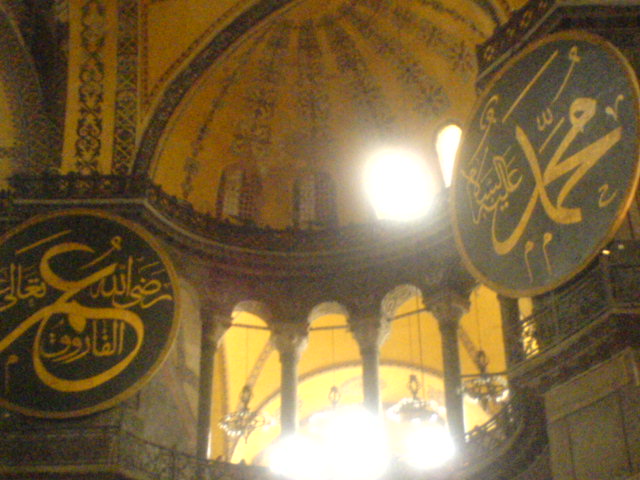
As you may have already read before, this blog is based on the spread of knowledge. This is its primary and most important function. We have posted on many topics about knowledge and its acquisition, this is no different but with an important difference, now we want to look at the importance and search for knowledge.
Many people ask us about which group is the best, confused with the claims of many of groups that theirs is the best group on the right path. And that all others are astray. This claim is really confusing for many Muslims who have either just come into Islam or those who are beginning their journey.
The first revelation was إقرأ which can be translated as "Recite or read" this is in the imperative or command tone. In other words, you do not have an option, you have to read. This is the first word of the last revealed book and it is not for naught that this word was revealed first. Through this word came the Quran. All the knowledge of Islam began at this point. What else were you going to do with a divine book but read it! All the knowledge of the known universe began to find its place in the world from this one command. From this one command we benefit, daily as our lives would not be the same without it.
Any group who calls to itself, the group, then you must know that there is an immediate problem as they should be calling to the religion not their group. You will now know that they are not calling to the Islam, rather they are trying to increase their membership. Then you must investigate whether they are basing their call on knowledge or something else. If they are basing their group on anything other than knowledge then know that there is something not quite right. As it does not matter how many hospitals that the group builds, the most important point is are they building teachers or scholars. I am not talking about the kind that you could call a "evening" or "weekend" teacher in other words someone who knows one subject and can teach that. I am talking about a teacher who can teach a myriad of different subjects, that's the kind of teacher that interests us.
All groups are calling to light but for many it's like calling to a lamp that is not plugged in, switched on or working. They are calling to the same thing but in their different ways and some are better than others!
Who do I study with?
There are some things that you must bear in mind when studying with a scholar in the West. Is the person who you are studying possess a chain of transmission back to the source of knowledge? If not then they are the same as those calling to knowledge without being plugged in.
Sunni Islam is defined as someone belonging to one of the four schools of jurisprudance, Hanafi, Shafi, Maliki and Hanbali. Then belonging to one of the following schools of doctrine: Ashari, Maturdi or Athari. The final school of doctrine has very few followers in our time. This definition is for the scholars and not the average person. Any school other than the ones mentioned is outside the scope of Sunni Islam.
Using the above description you can find which groups are truthful. Many have slogans which sound amazing but when you actually go into the nitty gritty of the group you can find it to be illogical. Some are worse than others and others are better than some.
Abu Yazid Al-Bistami once said to a man who relied on books, "You have taken your knowledge from something dead - but we have taken our knowledge from the Living, who never dies." (Islam in Andalus A.Thomson and M. Ata ur-Rahim p.36)
What should I study?
The basics are how to pray, fast, recite the Quran, basic doctrine and any knowledge that pertains to your situation or what's called 'Ilm Al-Hal. So if you are involved in buying and selling then you should study that so you know what you can do and what you cannot.
You can get most of these knowledges from deen intensives which are a good taste for anyone wanting to study. Although it may take more than one full course to understand the basics. It is a real problem that people have to learn the basics later on in life and not early on in life as it should be. Why? We did not learn the basics until later in life because it was simply not available to us.
What to do with knowledge once it has been acquired?
The most important thing that knowledge must show you is guidance and then once you have the knowledge does it becomes necessary to follow up on it. The stages of knowledge are three: one learning, two practicing and three teaching. They are in order of implementation, so bear that in mind.
To act upon knowledge takes time, energy, effort and is not always easy. It can take several weeks or even months to work on a part of practice until you have got it correctly. It is worth the effort so keep trying, forty days is normally the time when you are able to secure yourself that trait or action that you seek to rectify.
In the UK you may have to take your knowledge from more than one teacher. What I mean is that you may have to take different parts of your knowledge from different teachers. As we all know that every teacher will improve the student but you may not have the luxury of taking all your knowledge from one source.
Do we respect knowledge?
I do not think we do and here are my reasons for saying so. We do not respect those who study when we deem it a trivial matter to argue with those who have studied the religion. Not just for a while but for several years. How can we argue when we do not possess knowledge? For scholars arguing is disliked what about the average person? It is prohibited but does that stop us?
We import Imams from abroad not because we are unable to get them here but just for the fact that the masjid committees can control them; because if he says something that they do not like then his visa is "lost."
We do not pay teachers a good wage which means many have to do other jobs, if they are truthful, and they may need to use other means to get by. We have masjid committees who are not interesting in spreading knowledge or getting good teachers or anything other than opening ever bigger masjids, which are empty for most of the year.
Lets be fair there are some committees who have committed themselves to getting the best teachers and helping spread knowledge but the vast majority of masjid committees are not interested, for whatever reason, in spreading knowledge. Thus preserving Islam for the next generation, the less we do is the least they will. So is it not high time that we began to spread knowledge instead of building great empty buildings, lets build men who can change towns and cities. Many slaves that America imported during the slave trade were Muslim and the reason that Islam did not spread was because outside forces did not allow the transmission of knowledge. So the next children would be Muslim but just in name. This continued until Islam left them and there were people whose ancestors were Muslim and they were not.
One brother, on the our mosques our future lecture, commented on how he did not understand the friday sermon in his local masjid because it is in Urdu. This to me is an ongoing nightmare for many new Muslims and others who do not understand Urdu because they do not have access to the language. So all they can do is sit their as the Imam screams and shouts something that they have no access to. (http://www.radicalmiddleway.co.uk/videos.php?id=2&art=28)
Why don't we get an English speaking person to summerise the sermon? Or better still have some English speakers to deliever a Friday sermon now and then. In Islamic history people who have gone to lands of predominately non-Muslim population made an effort to speak the language of the people. Allah informs us in the Quran that he sent every Prophet (upon them peace) on the tongue of the people.
"We have sent no Messenger save with the tongue of his people." (14:4).
Yes, we do have people who cannot access the English but shouldn't we make an effort for everyone to access what we have? How can we be serious about reaching out to people to give them Islam, if they cannot understand the language we speak? Some groups take advantage of this and use it against us. We must be proactive and change the status quo.
Sometimes I think that people are not serious about spreading Islam in the Europe and the US. If they were serious then they would speak English and not another language. How can you expect people to come to Islam when all you speak is Urdu? This approach only works for those who understand the language not others. We need to update ourselves with our environment. We are in England and people need Islam more than we know. It is about time that people woke up to these facts because one of the ways that dissidents enter a community is by speaking English.
I wonder now if the only way knowledge can be spread if young Muslims open masjids or teaching schools. Is this the only way? To break away?
The greatest respect that knowledge is shown, is when someone acts upon it and the greatest disrespect that knowledge is shown when people know and do not care. Know that a person who refuses to learn gets two punishments and the one who is weak in following up on his knowledge gets one.
Know that seeking knowledge is lifetime occupation and not something one can do every now and then, all your time must be taken up by seeking, finding, reviewing, sourcing and reading.
We hope that this proves useful to those studying and those about to study, this is a serious affair and not something to be taken lightly.
If we are complacent in this affair then our children will not be saying what we do and we will have no one to blame but ourselves.
Please click here on the Student files label for other student of knowledge resources.
Wednesday, June 10, 2009
Wednesday, May 13, 2009
Annemarie Schimmel
Classical Sufism Parts one to five
The Muslim scholar talks about the beginnings of Sufism
The Muslim scholar talks about the beginnings of Sufism
Tuesday, April 21, 2009
Sunday, February 15, 2009
Monday, March 10, 2008
Thursday, February 21, 2008
Subscribe to:
Posts (Atom)